
Last updated November 5, 2026
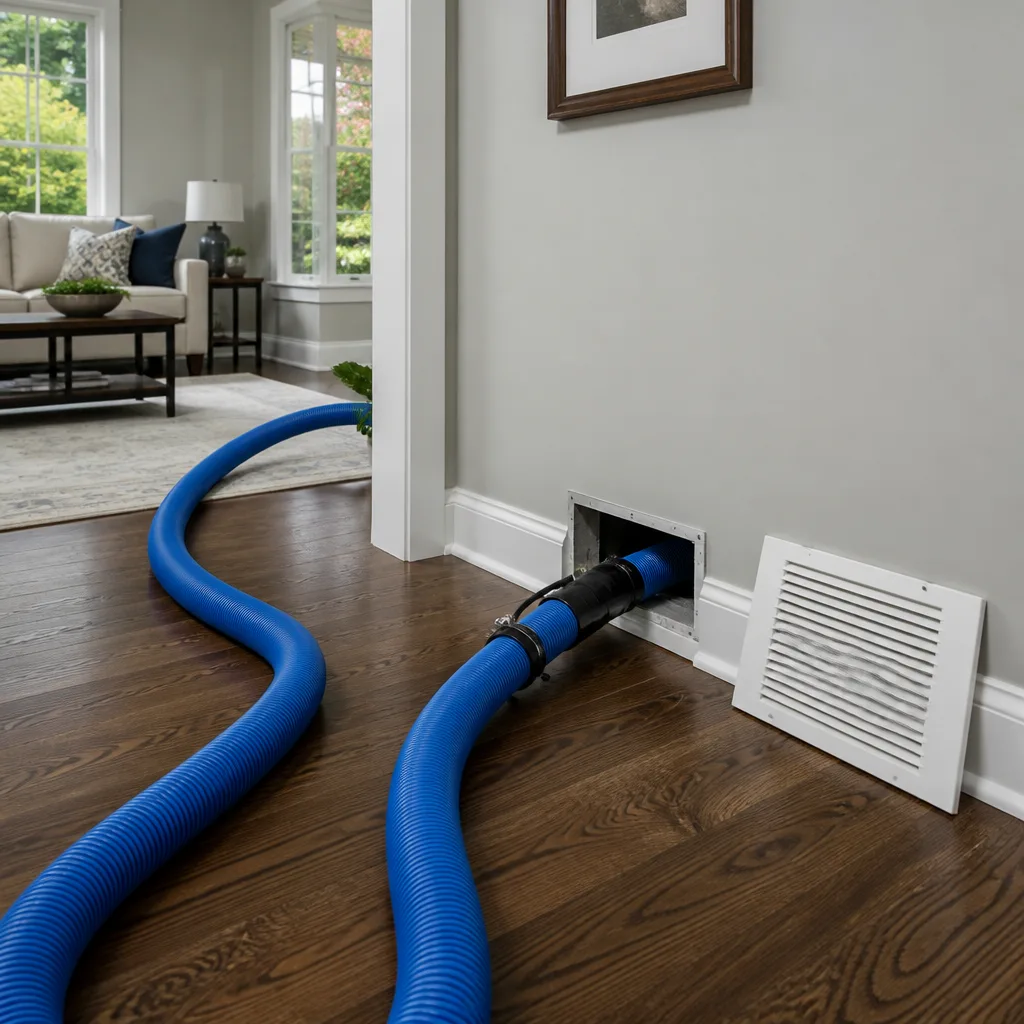 Whole-home duct cleaning
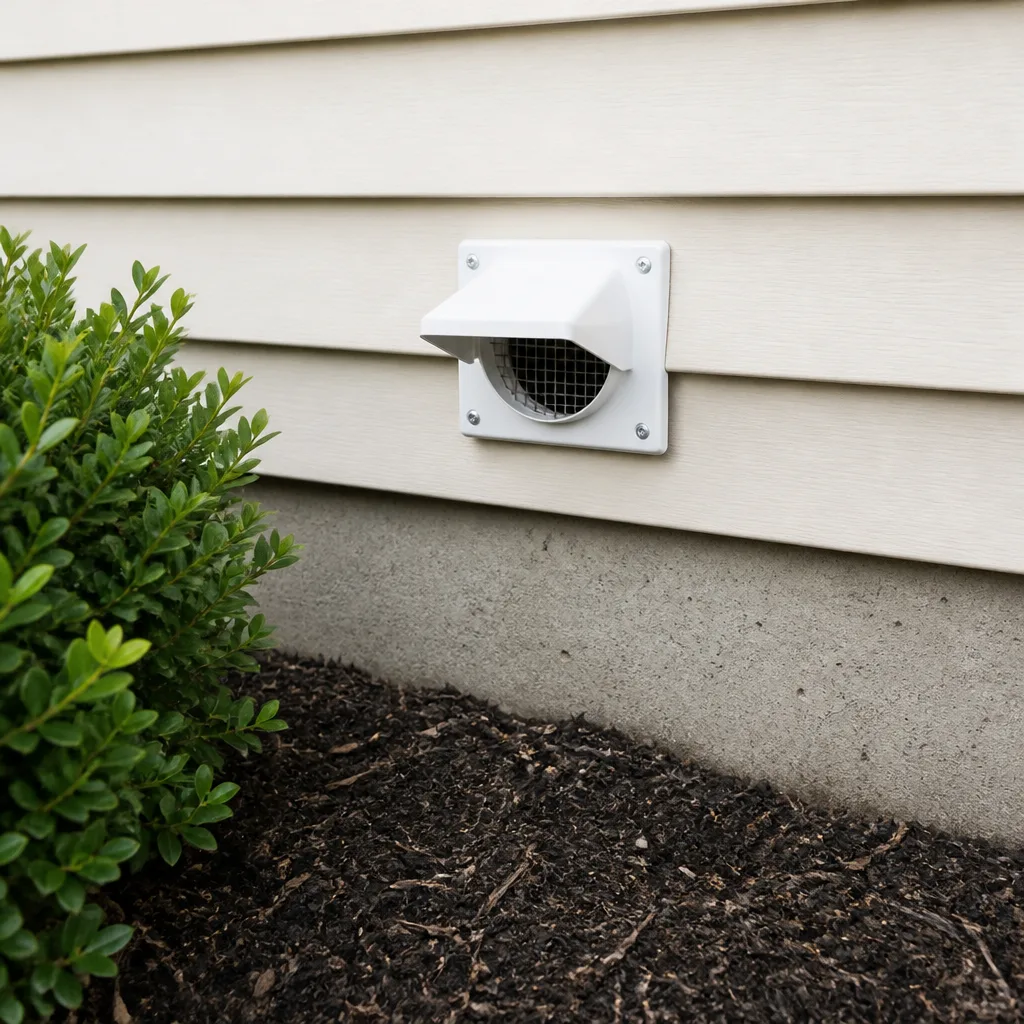 Dryer vent cleaning
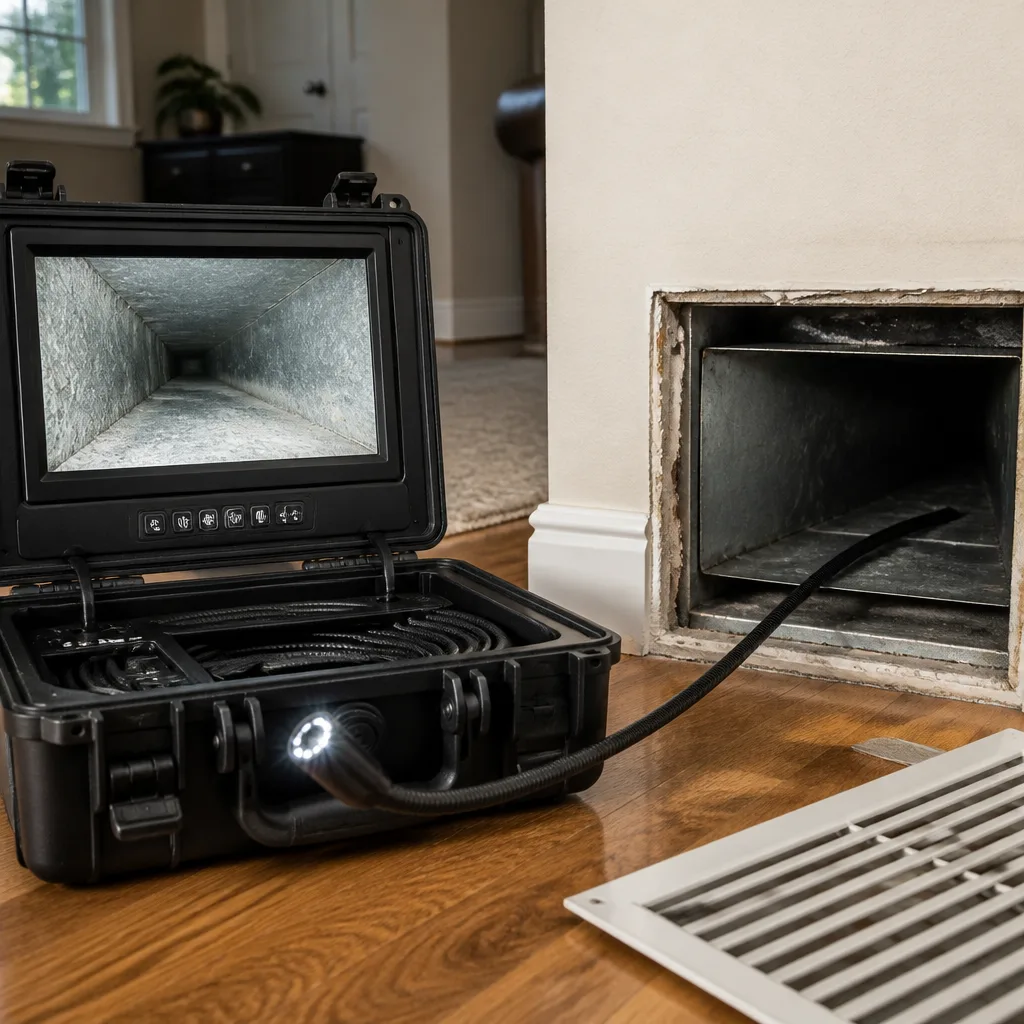 Camera inspection
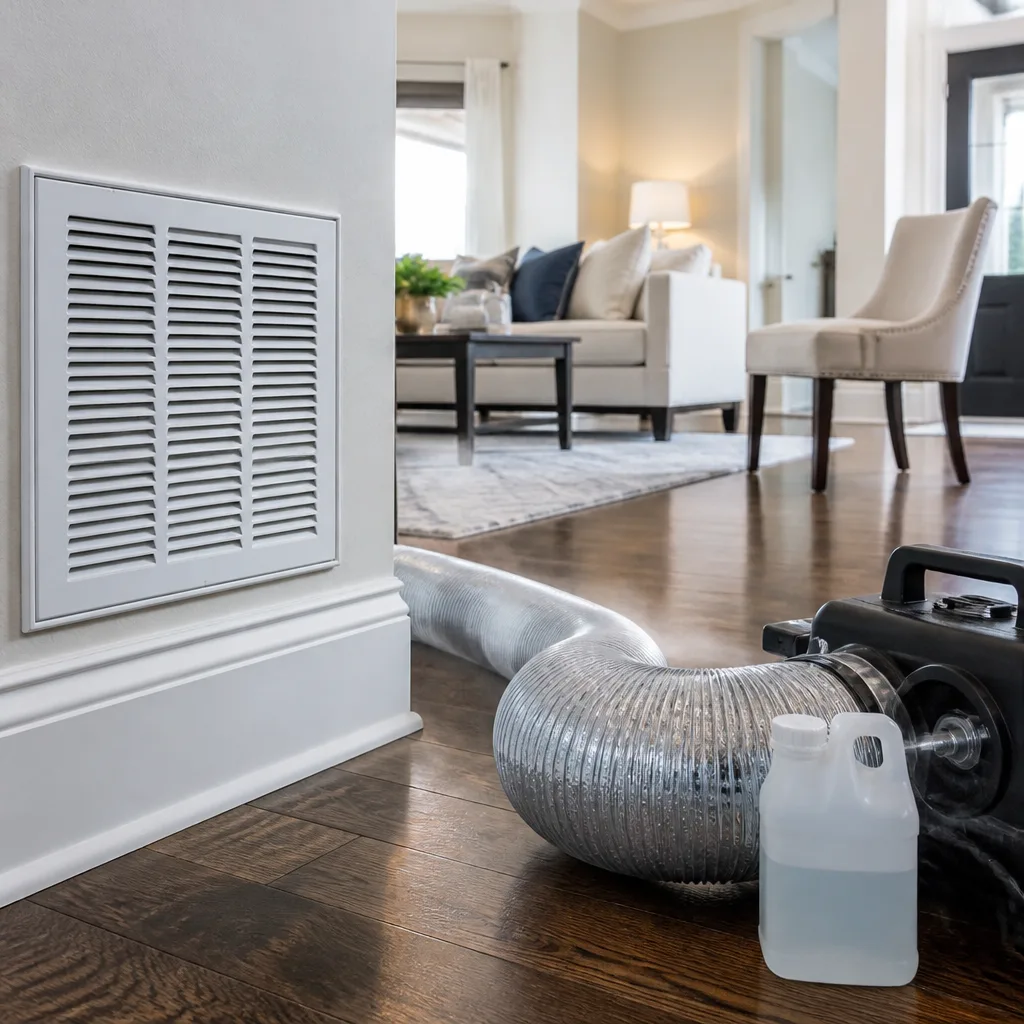 Sanitizing & deodorizing
Whole-system duct and dryer vent check with before-and-after photos - you see exactly what came out of your vents
That "$99 whole-house special" is a bait ad - the real number appears once they are in your hallway, or the "clean" is a shop-vac at the register. We photograph the inside of your ducts before and after instead.
Air Duct Cleaning Emergency Preparedness Guide for Corona Homes
Most Corona homeowners think emergency preparedness means bottled water, flashlights, and a go-bag. Few realize their HVAC system is the single largest vulnerability in the house during a wildfire, earthquake, or flood event. A forced-air system can pull contaminated outdoor air through its returns and distribute it to every room faster than you can tape a window. This guide explains what actually happens inside your ducts during Corona’s most likely emergency scenarios, how to protect the system before an event, and what a professional should do afterward. We’re writing this from direct field experience serving Corona homes since 2012.
Quick Answer
Air duct cleaning after an emergency event in Corona is not a routine maintenance task. Wildfire smoke, earthquake debris, or water intrusion changes what’s inside your ducts and demands a different protocol: immediate HVAC shutdown, a professional post-event inspection, and targeted cleaning with containment equipment that prevents cross-contamination. Your goal is to stop the system from spreading contaminants to occupied rooms, then restore it to safe operation with professional-grade tools like Rotobrush and Nikro systems rather than household workarounds.
Styles & brands we work with
- Whole-home duct cleaning
- Dryer vent cleaning
- Camera inspection
- Sanitizing & deodorizing
Table of Contents
- What Wildfire Smoke Does to Corona Ductwork
- Step-by-Step Protocol After Wildfire Smoke Exposure
- Earthquakes and Duct Contamination: What Moves When the Ground Does
- The 48-72 Hour Window: Water Intrusion and Duct Liner Replacement
- Protecting Ducts During Renovation and Nearby Construction
- Building a Corona Emergency HVAC Kit
- Common Mistakes to Avoid
- When to Call a Professional
What Wildfire Smoke Does to Corona Ductwork
Corona sits in a geography where Santa Ana winds push wildfire smoke from the Cleveland National Forest, the Santa Ana Mountains, and sometimes the Inland Empire’s eastern foothills directly into residential neighborhoods. The 2020 Silverado Fire burned in the Santa Ana Mountains and sent particulate matter into Corona homes even with windows closed. Most of that infiltration happened through HVAC return systems that were running on automatic. Your air conditioner doesn’t create fresh air, it recirculates what’s already inside and whatever gets pulled through gaps around windows, doors, and especially the return ductwork.
Here’s what’s actually inside your ducts after a smoke event. Wildfire smoke carries particulate matter in three size ranges: large ash particles you can see, fine particulates that settle as a gray film, and sub-micron particles that penetrate deep into porous surfaces. Duct interiors, especially flex duct with its ribbed walls and fiberglass liner, hold onto fine smoke particulates aggressively. That’s because the surfaces are rarely smooth metal. Older systems in Corona homes built fifteen or twenty years ago often have internal fiberglass insulation that acts like a filter, capturing smoke particles that later re-release when airflow changes.
The problem compounds because smoke particles are not inert dust. They carry volatile organic compounds from burned vegetation and structure materials. Even after outdoor air clears, an HVAC system that ran during the event can continue distributing captured particles for weeks. Homeowners describe a campfire smell that returns every time the system cycles. That’s the ductwork off-gassing what it absorbed. Standard maintenance cleaning may not address this. It requires agitation methods that physically dislodge embedded particles from porous liners, which is why we use professional-grade Nikro systems with high-pressure air agitation rather than a rotating brush with soft bristles.
Shutting Down the HVAC: The Critical First Decision
The single most important action during any wildfire smoke event is to shut down the HVAC system immediately. Not when you smell smoke, not when you see ash on the windowsill, but the moment a smoke advisory reaches your area. Corona’s air quality during fire season can degrade rapidly. An automatic system will keep cycling, pulling smoky air through the returns and pushing it through supply registers. Every cycle deposits more particulate matter inside the ductwork. A system that runs for four hours during heavy smoke needs a different level of cleaning than one shut down in the first thirty minutes.
After shutting the system down, close all windows and doors, and if you have a dedicated outdoor air intake, close that damper as well. Most Corona homes do not have a dedicated outdoor air intake, but energy-recovery ventilators are appearing in newer construction, and those should be switched off. Do not run fans that create negative pressure, including bathroom exhaust fans and the range hood. Negative pressure increases infiltration through the building envelope, and in a smoke event, that means pulling more contaminated air through wall penetrations and into the conditioned space.
When to Restart After the Smoke Clears
Restarting too early is the most common mistake we see in Corona after a smoke event. Air quality index readings may improve at ground level while fine particulate matter remains suspended in the duct system. Restarting the blower simply re-suspends those particles and pushes them into bedrooms and living spaces. The correct sequence is inspection first, cleaning if needed, then restart. A post-event duct inspection should include visual assessment of return boots, supply registers, and accessible duct sections. Dark gray or black streaking around supply registers is a strong indicator that particulate matter moved through the system under pressure.
If the inspection shows significant smoke deposition, professional cleaning with containment is the right next step. We set up negative-air containment using Abatement Technologies equipment, the same standard used in remediation work. This means the area around the cleaning access points stays under negative air pressure relative to the rest of the house. Air moves into the containment zone, not out of it. Contaminants we dislodge get captured by HEPA filtration before air returns to the occupied space. Without that containment, aggressive cleaning can actually make things worse by releasing captured particles into the living areas.
Step-by-Step Protocol After Wildfire Smoke Exposure
Here is the sequence we recommend for any Corona homeowner who ran their HVAC system during a wildfire smoke event, or who suspects smoke entered the home through passive infiltration.
- Document the event. Note the dates your system ran during smoke advisories and what you observed at supply registers. If you saw a gray film on furniture or window sills, that same film is inside your ductwork in higher concentration. Take photos of register surfaces before any cleaning happens.
- Leave the system off until inspection. This is frustrating in hot weather, but running the blower before inspection can distribute captured particulate matter deeper into the finished space. Use portable fans pointed at open windows during cooler evening hours if you must move air.
- Change the HVAC filter immediately. A filter that captured smoke particulate is exhausted and should not remain in service. Wear an N95 mask while handling it. Seal it in a plastic bag before disposal. Do not vacuum the return cavity with a household vacuum, that just re-suspends particles.
- Schedule a professional duct inspection. The inspection should include access to the supply and return plenums, visual assessment of the blower compartment, and examination of accessible duct interior. We look for smoke streaking, particulate buildup on liner surfaces, and odor that intensifies when the system starts.
- Proceed with cleaning only if justified. A clean system after inspection doesn’t need aggressive cleaning and a filter change plus exterior register cleaning may be enough. If cleaning is warranted, insist on containment and negative air. Professional-grade equipment from Rotobrush and Nikro with HEPA-filtered Abatement Technologies containment is the standard for post-wildfire work in Corona.
- Restart and monitor. After cleaning, run the system on fan-only for thirty minutes with a fresh filter. If any smoke odor returns, especially during the first few heating cycles, have the system re-inspected. Porous liner sections sometimes require replacement rather than additional cleaning attempts.
Earthquakes and Duct Contamination: What Moves When the Ground Does
Corona sits in one of the most seismically active regions in California. The Whittier-Elsinore fault zone runs near the city, and the San Jacinto and San Andreas fault systems are close enough to produce significant shaking here. When the ground moves, houses flex. Ductwork, especially rigid sheet metal systems in attic and crawlspace locations, moves with the structure. That movement can dislodge materials that have sat dormant inside the duct system for years.
Here’s what actually happens. Duct sections are connected with sheet metal screws, draw bands, and sometimes mastic sealant. During shaking, joints flex and older mastic becomes brittle and cracks. Debris that settled in the bottom of horizontal duct runs during years of normal operation can shift. More concerning is the insulation. Duct systems wrapped externally with fiberglass insulation can have sections separate from the duct wall, especially where the vapor barrier cracked years ago. During shaking, insulation fragments can fall into open duct sections through separated joints.
Post-earthquake duct inspection is not typically part of a standard home inspection checklist. Most homeowners check for visible structural damage, gas leaks, and water line breaks. The HVAC system gets a quick look at best. If it still runs, people assume it’s fine. But a system can run while distributing insulation fibers and dislodged debris through the supply registers. After any significant earthquake in Corona, especially one that causes visible drywall cracks or moves furniture, we recommend a visual inspection of accessible duct sections before running the system extensively.
The inspection should focus on joint separation, duct crushing, and the condition of internal liner if your system has it. Flex duct can kink or pull away from register boots during shaking. A kink doesn’t stop the blower, but it creates turbulence that dislodges particles. Separated joints pull debris from the surrounding attic or crawlspace into the airstream. This is a different contamination scenario than smoke. It’s mechanical disruption, and the solution often involves duct repair rather than cleaning alone. That’s why we offer air duct cleaning and repair as separate but related services. We clean it, and if it’s broken, we fix it in the same visit.
The 48-72 Hour Window: Water Intrusion and Duct Liner Replacement
Water intrusion changes the timeline dramatically. If flood water, a burst supply line, or a roof leak reaches your ductwork, you have roughly 48 to 72 hours before biological growth becomes established in porous materials. That’s the same window used in water damage restoration. Porous duct liner, internal fiberglass insulation, and flex duct fabric absorb water quickly. Once absorbed, those materials can support growth that no amount of surface cleaning removes.
The first action after any water intrusion event is to shut down the HVAC and identify whether water reached the ducts. If you saw water dripping from supply registers, the answer is yes. If the duct system runs through a flooded crawlspace or water-saturated attic insulation, assume contamination even if you didn’t see water at the registers. Wet insulation above ductwork drains down. Water wicks through the vapor barrier and into the duct interior.
If water reached the system, the decision tree is simple and time-sensitive:
- Within the first 48 hours: Professional extraction and drying of accessible duct sections may be possible. Solid sheet metal ducts with minimal porous liner can often be dried, cleaned, and sanitized. The key is removing standing water and forcing dry air through the system immediately.
- Between 48 and 72 hours: Porous materials like flex duct and internal liner are increasingly likely to require replacement. Cleaning becomes a judgment call based on visual and moisture-meter assessment. Growth that has started inside liner material cannot be scrubbed away.
- Beyond 72 hours: Replacement is almost always the right answer for flex duct, lined sections, and any duct with visible biological growth. The material is compromised. Cleaning it leaves the risk in place.
Corona’s climate actually works against you here. Summer temperatures routinely exceed 90 degrees, and humid conditions inside a wet duct system accelerate biological activity. A flooded crawlspace duct in August has less time than a winter event. The 48-72 hour window is a guideline, but in Corona summer conditions, the practical safe window may be shorter.
Protecting Ducts During Renovation and Nearby Construction
Corona has seen substantial residential renovation and new construction activity. Whether you’re remodeling your own home or living next to a lot being graded and built, construction dust is a major duct contamination source. Drywall dust, sawdust, and demolition debris find their way into return ducts even when contractors seal off work areas. Contractors try to contain dust, but HVAC systems running during renovation pull particulates through return registers in adjacent rooms and distribute them throughout the house.
The simplest protection during any interior renovation is to shut the HVAC system down while construction is active, or at minimum, seal return registers in the work zone with magnetic covers or tape and poly sheeting. A better solution is to cover the returns and run the system on fan-only with a high-MERV filter installed, if your blower can handle the pressure drop. Honeywell and Aprilaire both make high-efficiency filters that capture construction dust effectively, but not every system has a filter cabinet designed for the higher static pressure. We work with both Honeywell and Aprilaire products, and we can recommend what your specific system will tolerate.
For exterior work, such as a neighboring lot being graded or a roof replacement on your own home, the threat is airborne dust entering through the building envelope. Keep windows closed and consider running the system with a high-efficiency filter if outdoor work is active for days or weeks. When interior renovation is complete, a professional duct cleaning removes the fine dust that settled inside the system despite your precautions. The return plenum and blower compartment typically need attention too, not just the supply side. Drywall dust is remarkably fine and finds its way into every gap.
We’ve seen Corona homes where a remodel ended and the owners noticed dust on horizontal surfaces for months afterward. The dust wasn’t coming from the remodel. It was cycling through the HVAC system, trapped in the ducts and re-released every time the blower ran. That’s what we mean when we say the system becomes a dust reservoir. Cleaning the reservoir solves the problem permanently.
Building a Corona Emergency HVAC Kit
Most emergency preparedness guides don’t mention HVAC, and that’s the gap this guide fills. A Corona homeowner who keeps a small, dedicated kit near the main return or utility closet is better positioned than someone who improvises during an event. Here’s what we recommend having ready before any wildfire, earthquake, or water event, not after.
- A spare high-efficiency filter in the correct size. Know your filter dimensions and keep at least one spare on hand at all times. A filter swap during or immediately after a smoke event prevents further particulate circulation. Write the size on the filter frame with a marker.
- Magnetic register covers or poly sheeting and painter’s tape. These let you seal returns and supplies in minutes during a smoke or construction event. Magnetic covers are reusable and available in standard register sizes. Poly sheeting and tape work for non-magnetic surfaces.
- An N95 or P100 respirator for filter changes and register inspection. Handling an exhausted smoke filter without a mask puts particulate matter directly in your breathing zone. Keep two masks sealed in a plastic bag.
- A flashlight and inspection mirror. When the power is out and you need to check register interiors, a flashlight plus a small mirror lets you see around corners into duct openings. Phone lights work, but not as well as a dedicated beam.
- Contractor contact information written down. During a regional emergency, cell service goes down and your phone book isn’t accessible. Write down the phone number for your preferred duct contractor and tape it to the side of the furnace. If you’re a Corona homeowner, Duct Cleaning Corona’s number is (855) 923-0983. We answer 24/7. Fast dispatch from 7am to 7pm, Sunday through Friday.
- Photos of your system before the event. Take phone photos of your duct layout, filter location, and any accessible duct sections now. Having reference images after an earthquake or flood helps a contractor assess changes. Store them in your phone and print them for the kit.
This kit costs less than fifty dollars and takes twenty minutes to assemble. It’s the difference between acting deliberately during an emergency and improvising while your system distributes contaminants through the house.
Common Mistakes to Avoid
- Running the HVAC during a smoke advisory because the house feels stuffy. Every cycle pulls more particulate matter into the duct system and distributes it through the living spaces. The discomfort of warm air is temporary. Cleaning a smoke-saturated system is expensive and time-consuming.
- Restarting the system immediately after smoke clears without an inspection. Clearing outdoor air quality doesn’t mean the duct interior is clean. Restarting re-suspends captured particles and pushes them into bedrooms. Inspection first, restart second.
- Using a household vacuum to clean registers and returns after a dust or smoke event. Household vacuums without HEPA filtration re-suspend fine particles into the air. The vacuum’s exhaust is the problem. This is the exact scenario that calls for negative-air containment with professional equipment.
- Delaying action after water intrusion because the ducts “look dry.” Duct interiors dry slowly, especially flex duct in a warm attic. The 48-72 hour window starts when water reaches the material, not when you discover it. If water entered the system, act immediately.
- Assuming earthquake damage is limited to what you can see. Duct issues hide in attics and crawlspaces. Joint separation and crushed sections aren’t visible from the living room. Run a post-earthquake inspection even if the system still blows air.
- Believing a standard maintenance cleaning addresses smoke contamination. Smoke particulate embeds into porous duct liner differently than household dust. It requires agitation methods and containment that general maintenance cleaning doesn’t include. Make sure your contractor’s equipment matches the problem.
When to Call a Professional
You should call a professional duct contractor after any event that sent visible smoke, water, or construction dust into your HVAC system. If you see gray film at supply registers after a wildfire, if water dripped from a register during a flood or roof leak, if an earthquake shifted your house enough to crack drywall, or if a remodel left dust on horizontal surfaces for weeks, those are all professional-level scenarios. These are not situations where a filter change and a register wipe solve the underlying problem.
Duct Cleaning Corona offers free estimates in Corona, and we arrive with the right equipment for the actual problem: Rotobrush and Nikro systems for cleaning, Abatement Technologies containment for negative-air pressure during event cleanup, and the diagnostic capability to identify duct repair needs during the same visit. Whether you need dryer vent cleaning as a fire-safety service or full duct system restoration after a contamination event, we treat the duct work as the core job, not an add-on. Call (855) 923-0983 for a free estimate. We answer 24/7. Fast dispatch from 7am to 7pm, Sunday through Friday.
See the difference
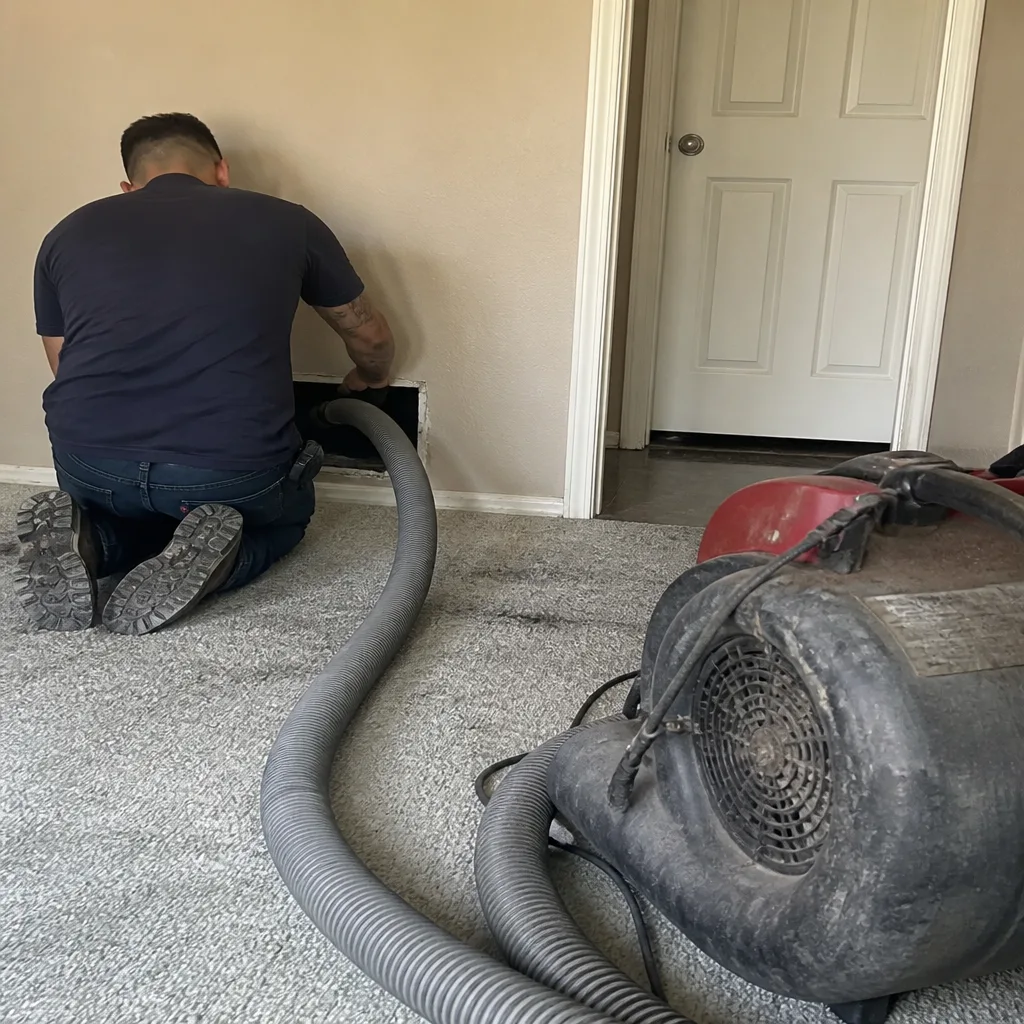 Before
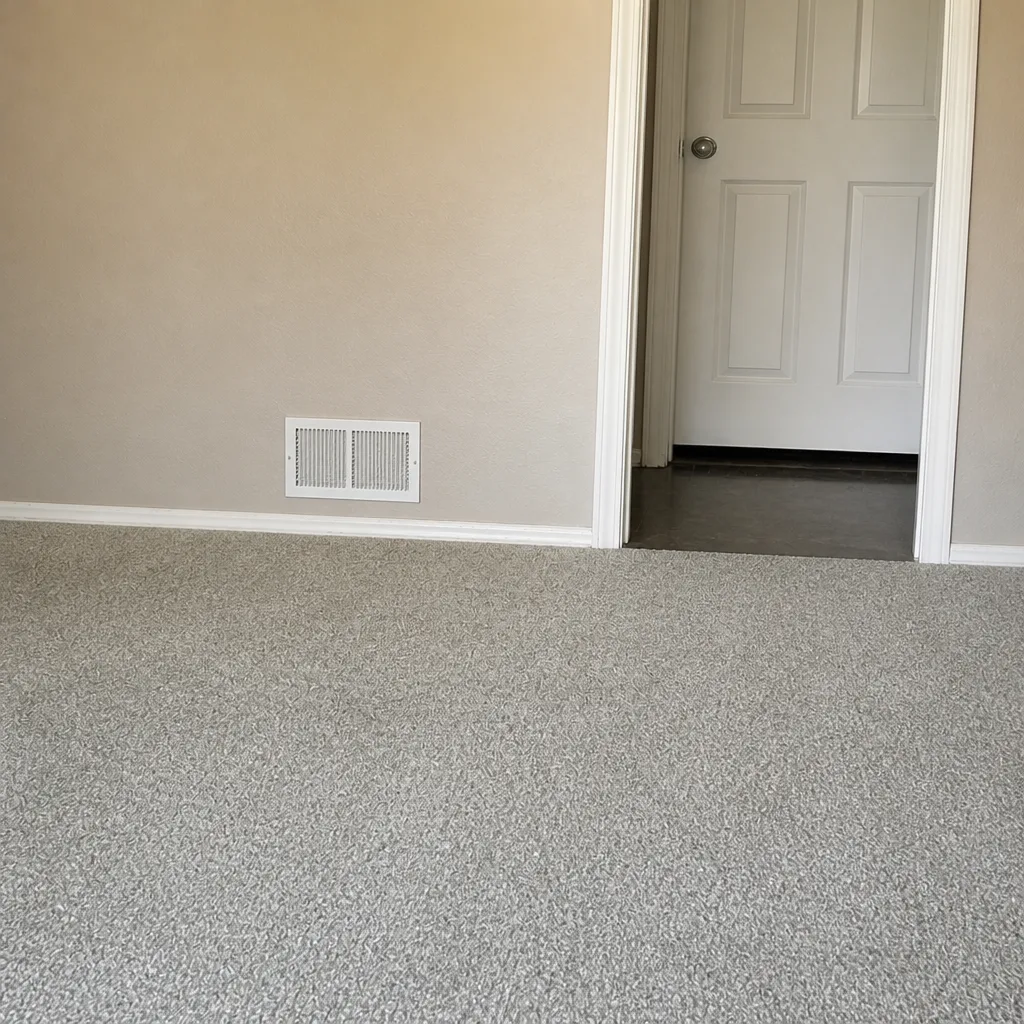 After
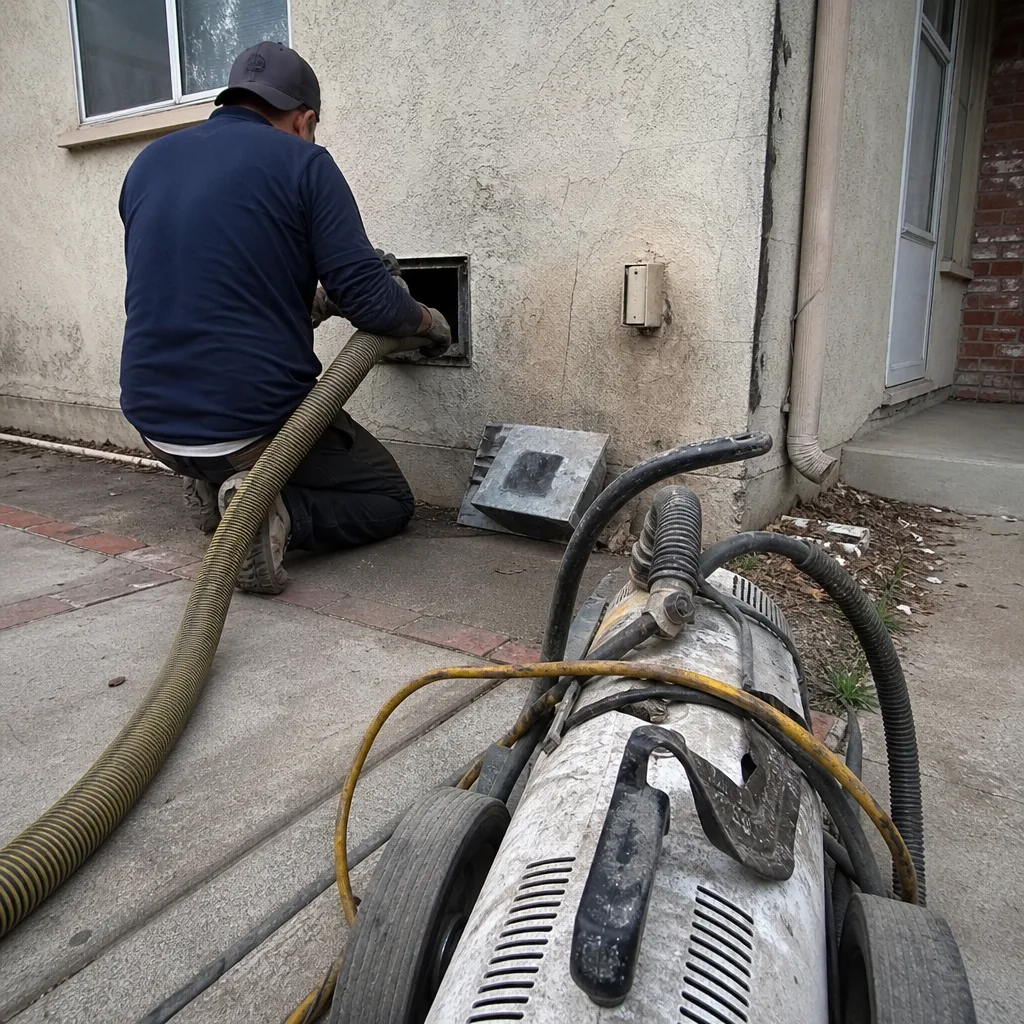 Before
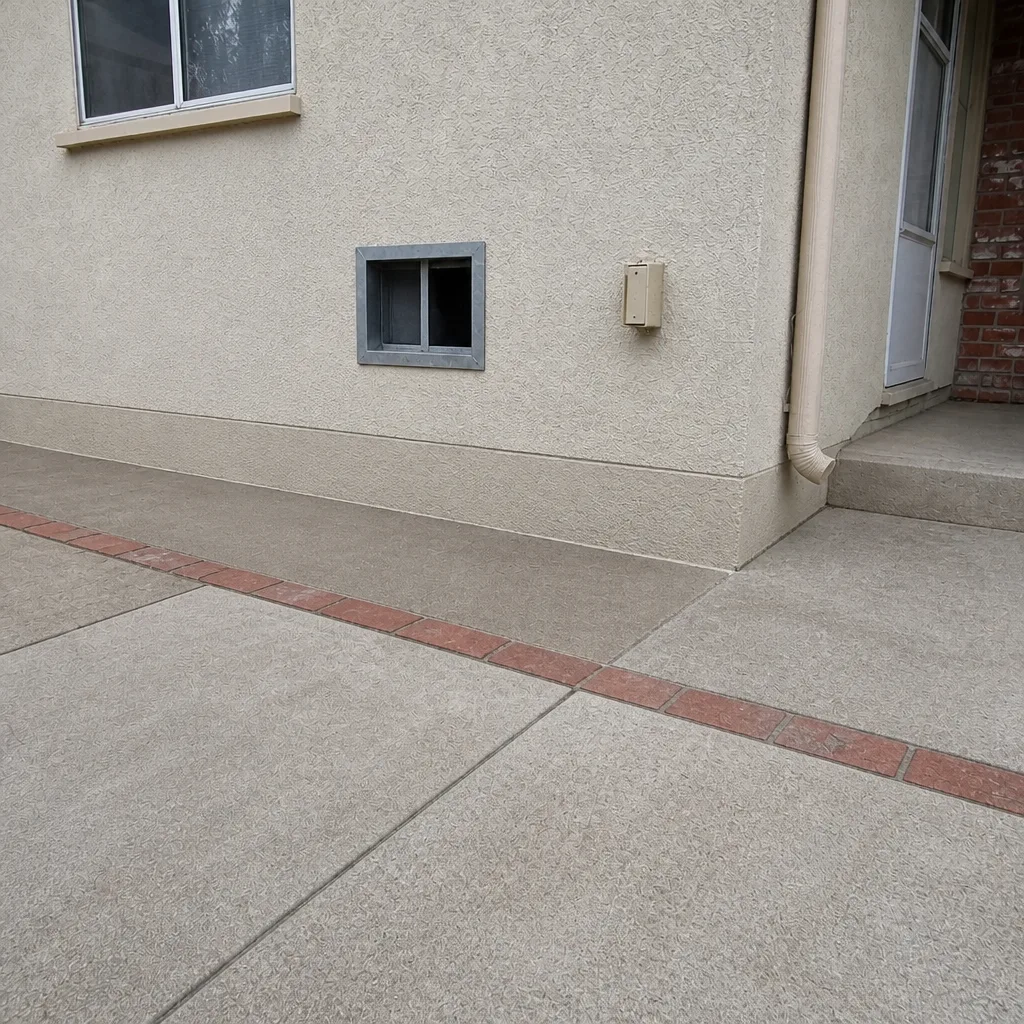 After
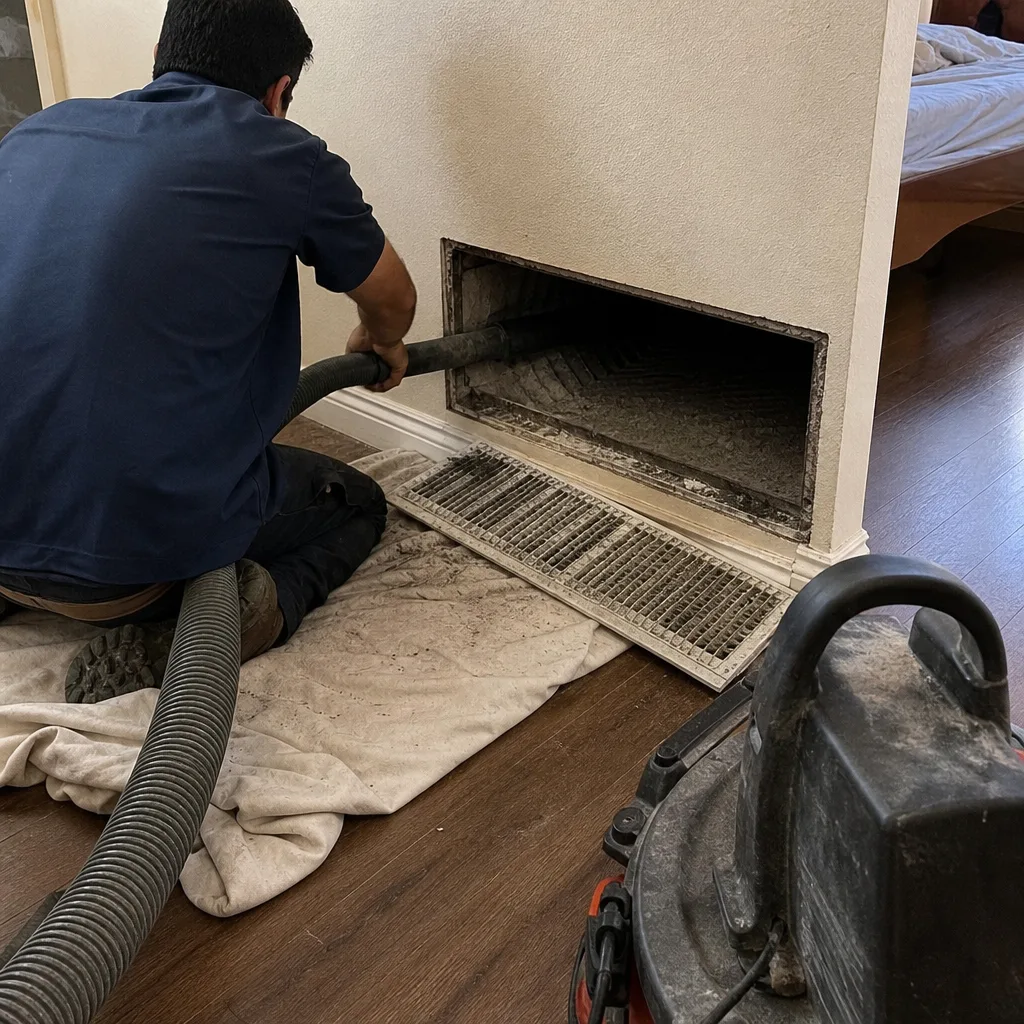 Before
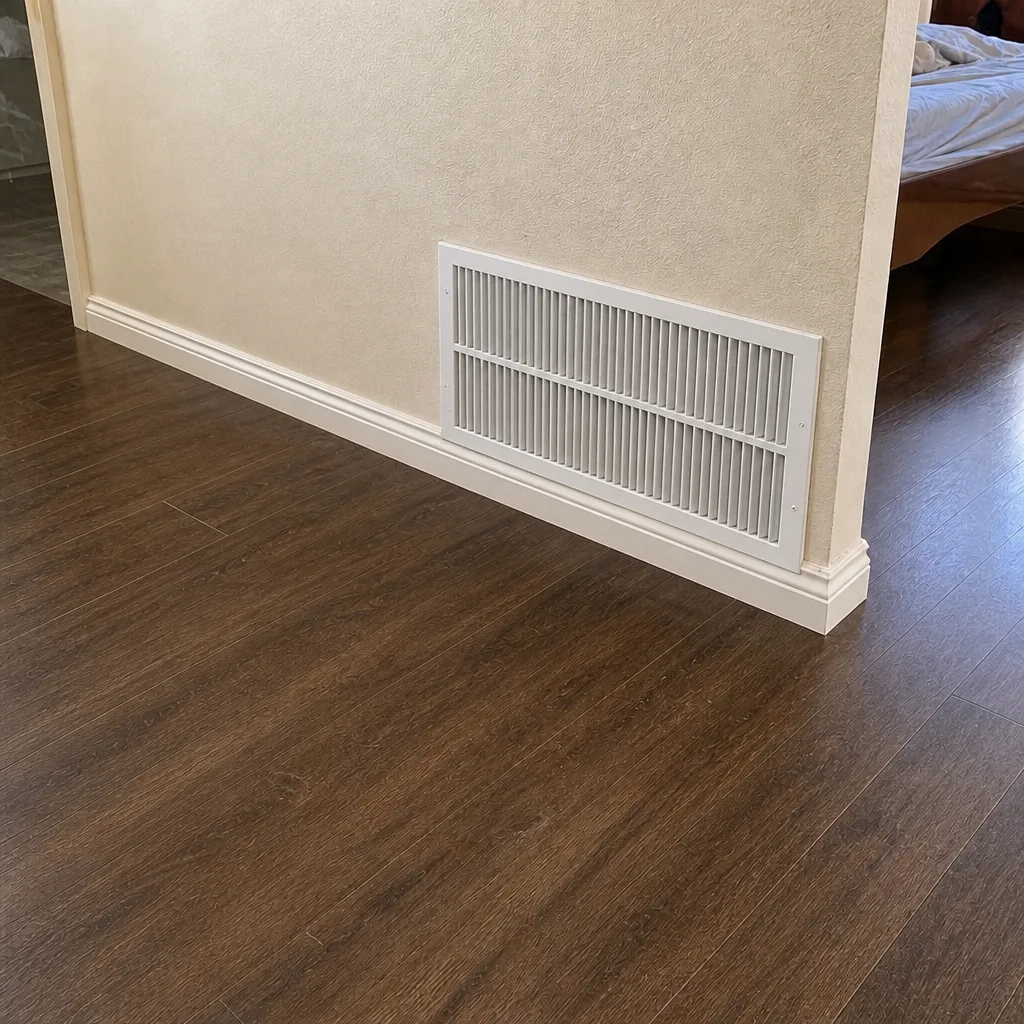 After
Frequently Asked Questions
You should wait until a professional has inspected the duct system for smoke deposition. Restarting immediately after outdoor air clears can release captured particulate matter into your living spaces. The wait time depends on how long your system ran during the smoke event and what the inspection reveals. A short smoke exposure with an early shutdown may mean a filter change and register cleaning are enough. A system that ran for hours during heavy smoke likely needs full professional cleaning with containment.
Yes, and it’s more common in Corona than homeowners realize. Houses flex during seismic events, and duct sections in attics and crawlspaces move with the structure. Joints separate, mastic cracks, and debris that settled in the bottom of horizontal runs gets dislodged. External insulation can separate and fall into open duct sections. After any significant earthquake, a visual inspection of accessible duct sections is the only way to know what moved.
Maybe, but only if you act within the first 48 to 72 hours. Solid sheet metal ducts with minimal porous liner can often be extracted, dried, cleaned, and sanitized. Flex duct with fabric walls or internally lined duct sections that absorbed water are much harder to save, and beyond 72 hours they almost always require replacement. Corona’s summer heat accelerates biological activity, making the safe window shorter during warm months.
A standard cleaning addresses typical dust and debris accumulation using agitation and vacuum collection. Post-wildfire cleaning addresses fine particulate matter embedded in porous duct liner, which requires high-pressure air agitation and HEPA-filtered negative-air containment. The containment piece matters because aggressive cleaning without it releases captured particles into the living space. This is why post-event work should use remediation-grade containment equipment like Abatement Technologies systems.
Yes. Dryer vents are a fire hazard, not a maintenance checkbox, and they’re especially relevant in Corona’s dry climate where lint accumulates quickly. A clogged dryer vent combined with the static electricity of dry air creates a fire risk that’s present regardless of other emergency events. We handle dryer vent cleaning as a dedicated fire-safety service, not an afterthought.
The determination comes from a professional inspection that considers the material your ducts are made from, what they were exposed to, and how long the exposure lasted. Solid metal ducts with smoke deposition typically call for cleaning. Flex duct or internally lined sections exposed to water for more than 72 hours usually call for replacement. Porous liner with embedded smoke particulate can go either way depending on severity. The inspection answer should be specific to your system, not a generic recommendation.
The Bottom Line
Corona’s specific risk profile, with its Santa Ana wind-driven smoke events, earthquake activity, and a climate that accelerates biological growth after water intrusion, means duct contamination scenarios here aren’t hypothetical. They’re recurring. The duct system in your home is either protected by deliberate action before an event or it becomes a distribution network for contaminants after one. The key moves are simple: shut down the HVAC during any smoke event, get a professional inspection after earthquakes or water intrusion, don’t restart blindly, and insist on containment-grade cleaning equipment when cleaning is warranted. A filter and a magnet cover can prevent serious contamination before it starts. When the event has already happened, Duct Cleaning Corona provides the equipment and expertise to get your system back to safe operation.
Written by the team at Duct Cleaning Corona, serving Corona since 2012.