
Last updated November 5, 2026
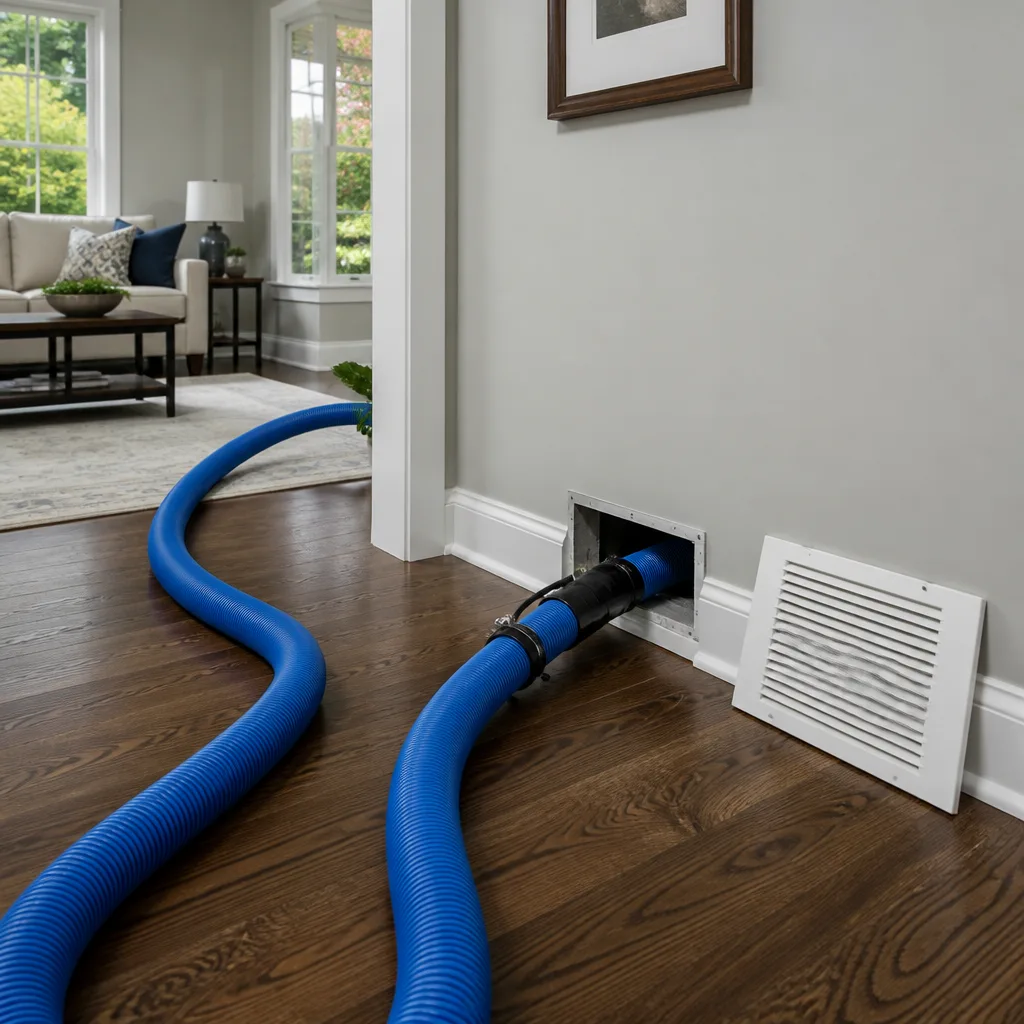 Whole-home duct cleaning
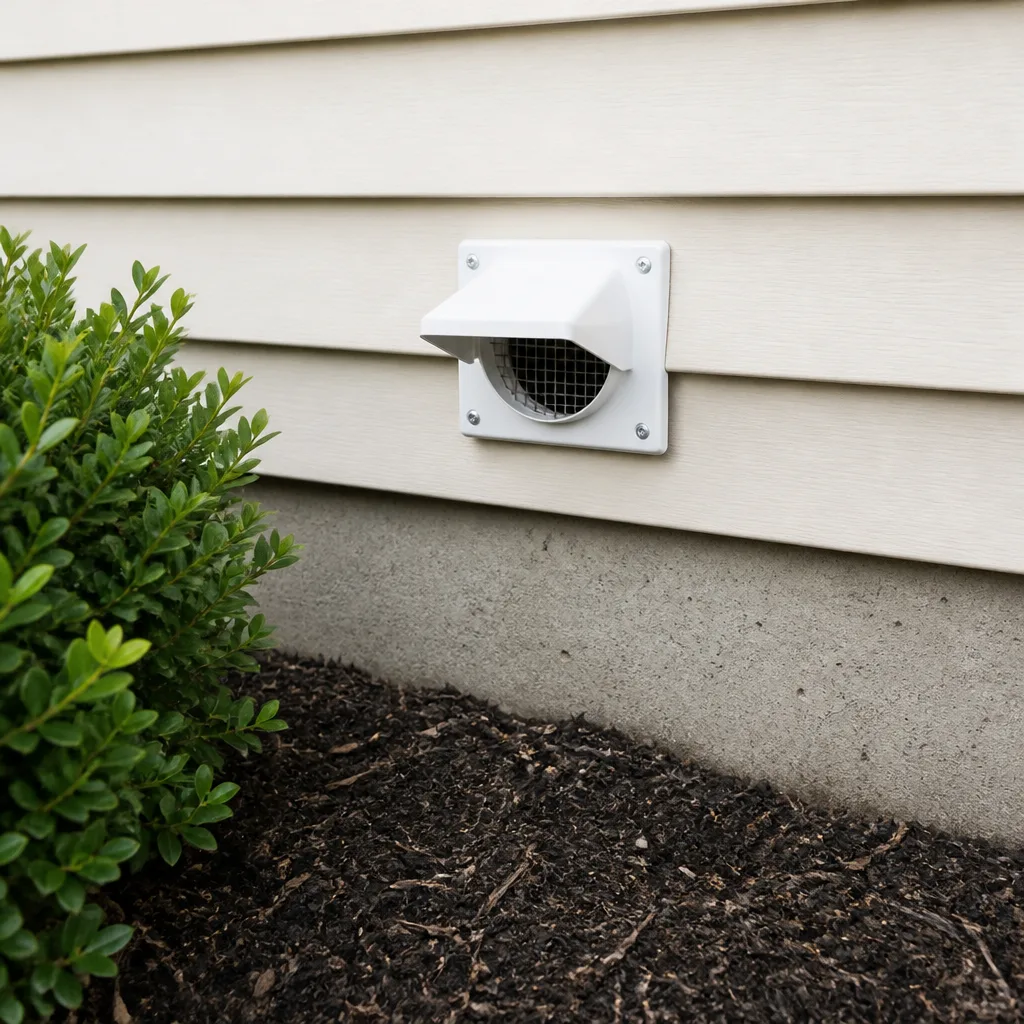 Dryer vent cleaning
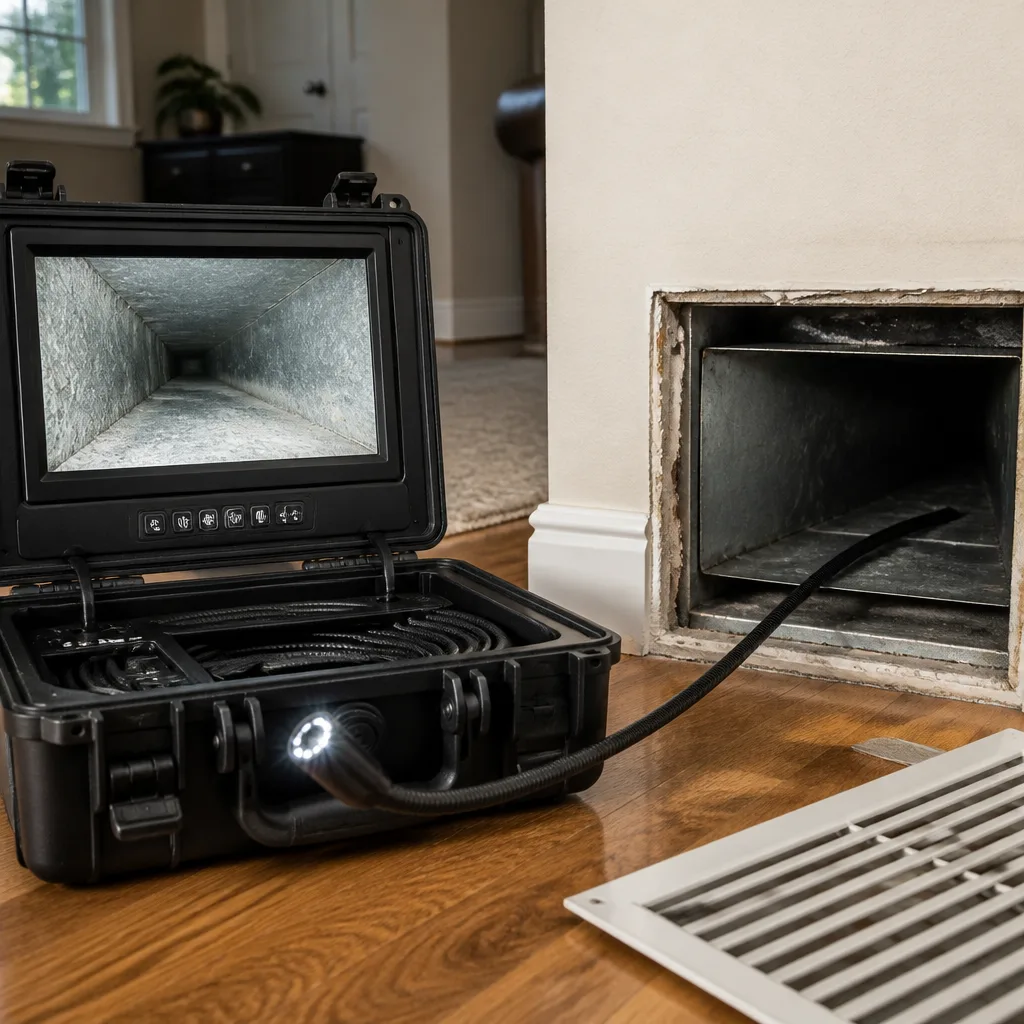 Camera inspection
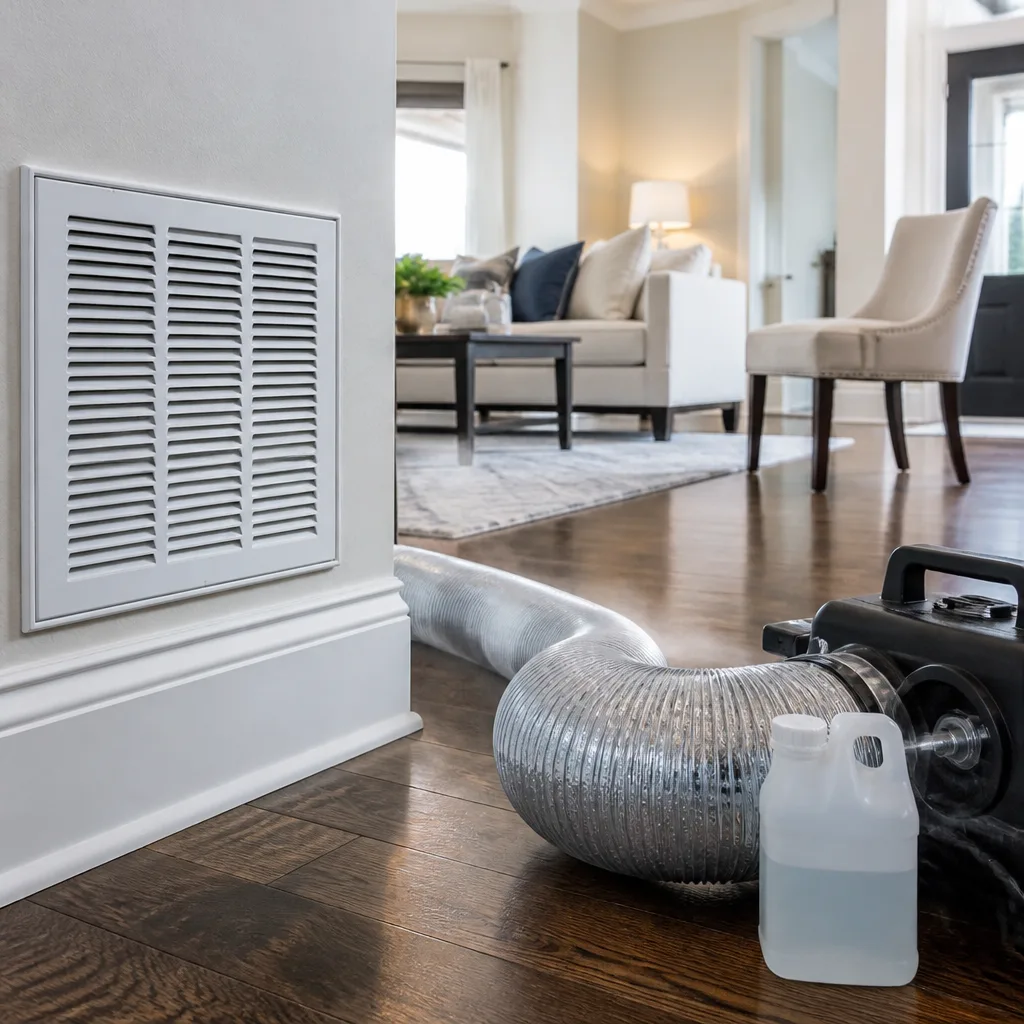 Sanitizing & deodorizing
Whole-system duct and dryer vent check with before-and-after photos - you see exactly what came out of your vents
That "$99 whole-house special" is a bait ad - the real number appears once they are in your hallway, or the "clean" is a shop-vac at the register. We photograph the inside of your ducts before and after instead.
DIY vs Professional Air Duct Cleaning: The Corona Homeowner’s Decision Guide
Most homeowners assume the DIY-versus-professional question comes down to money: save a few hundred bucks by running a shop vac through the registers, or pay a company to do it right. That framing misses the actual problem. The real question is whether consumer-grade tools can physically reach and remove the debris that matters, and in most cases the honest answer is no. A homeowner can spend an afternoon cleaning the first few feet of each register and have accomplished nothing that affects the air they actually breathe in their Corona home. This guide explains what’s actually happening inside your ducts, what you can legitimately do yourself, and where the line sits between useful effort and wasted time.
Quick Answer
Professional air duct cleaning in Corona delivers results that DIY methods cannot replicate because it uses negative-pressure containment and agitation tools that reach 10 to 40 feet into duct runs, while homeowner equipment only affects the first 18 inches of a register. DIY has a narrow but real place: cleaning registers and grilles, inspecting the filter box, and clearing a short, accessible dryer vent run. For actual air quality improvement in a typical Corona home, professional equipment is the only approach that removes fine debris rather than redistributing it.
Styles & brands we work with
- Whole-home duct cleaning
- Dryer vent cleaning
- Camera inspection
- Sanitizing & deodorizing
Table of Contents
- The Physics Problem: Why Negative Pressure Matters
- What a Homeowner Can Legitimately DIY
- What DIY Cannot Do: The 18-Inch Limit
- The Redistribution Risk: When DIY Makes Things Worse
- The Specific Scenario Where DIY Is the Right Call
- How to Evaluate Whether a Pro Quote Actually Beats DIY
- The Equipment Questions That Reveal the Answer
- Common Mistakes to Avoid
The Physics Problem: Why Negative Pressure Matters
Duct cleaning is not a suction problem. It is an air movement problem, and the two are not the same thing. A shop vac pulls air through a narrow hose at high velocity, which is great for lifting sawdust off a workbench. But a duct is a long, enclosed channel. The air inside it behaves differently than the air in an open room. To remove fine debris from duct walls, you need to create a pressure differential across the entire duct run, not just a strong pull at one opening.
Here is what actually happens inside a duct. Dust, pet dander, skin cells, and construction debris settle on the flat surfaces of the duct walls. Over years in a Corona home, where windows stay closed through long stretches of summer heat and HVAC systems run more hours per year than in milder climates, that layer builds up. In our experience, the buildup in Corona homes often includes a fine, powdery combination of desert dust and indoor particulate that settles into the duct walls and resists removal by casual brushing.
A professional system such as Rotobrush or Nikro connects to the duct trunk and pulls air through it at a controlled rate, creating negative pressure inside the entire run. That pressure differential does two things. First, it holds debris suspended in the air stream. Second, it prevents that debris from escaping into the living space through open registers. The agitation tools then knock debris loose from the walls, and the moving air carries it out through the containment system. Abatement Technologies negative-air equipment does the same job at the containment level, keeping the work area isolated so fine particulate leaves the home rather than drifting into the hallway.
Consumer vacuums cannot generate this. A shop vac creates suction at one point, not negative pressure across a 30-foot duct run. The debris beyond the first few feet simply does not move.
What a Homeowner Can Legitimately DIY
None of this means the homeowner is helpless. There are specific, scoped tasks that a homeowner can do with basic tools and measurable benefit. These tasks do not replace professional air duct cleaning, but they support it and keep the system in better shape between services.
Here is what actually works:
- Register and grille cleaning. Remove each supply register and return grille, wash them with warm water and a mild cleaner, and wipe the visible interior surfaces. This removes the dust that accumulates right at the opening, which is what you see and what triggers the instinct to clean. It does not affect the duct run itself, but it does improve the appearance of the system and reduces the amount of loose debris entering the air stream from the register itself.
- Return air filter box inspection. The filter box sits directly behind the return grille. Open it, check the filter, and replace it if it is loaded. A filter that has collapsed or been installed incorrectly allows unfiltered air to bypass the media entirely, which means all the dust the filter should catch is instead entering the duct system. This is the single highest-impact DIY task for air quality in a Corona home.
- Dryer vent clearing with a proper brush kit. A homeowner with a $40 to $80 dryer vent brush kit and a cordless drill can effectively clean a dryer vent run that is short, straight, and accessible from both ends. This is a fire-safety task, not a convenience task. Lint accumulation in a dryer vent is combustible, and a homeowner who does this job correctly is addressing a genuine hazard. The caveat: the vent must be accessible from both ends, and the homeowner must confirm the brush reaches the full length of the run. If the vent exits the roof or passes through a wall cavity that cannot be opened, the brush kit’s reach is limited to what the drill can push.
Each of these has actual impact. None of them is a substitute for cleaning the duct runs themselves.
What DIY Cannot Do: The 18-Inch Limit
A homeowner with a shop vac and a dryer vent brush can effectively clean the first 18 inches of a supply register. That is a useful number to remember, because it defines the boundary of DIY capability. The contamination that affects air quality lives 10 to 40 feet in, in the trunk lines and branch runs behind the walls, under the floor, or in the ceiling chase.
Corona homes present a specific set of challenges here. The housing stock spans several decades, and many homes have duct systems that have been in place for 20, 30, or 40 years. Duct runs in these homes are often longer than in newer construction, routed through tight attic spaces or under slab foundations. Crawl spaces in some Corona neighborhoods are shallow and dusty. Attic temperatures push 120 degrees in summer, which accelerates the breakdown of older flex duct inner liners. The result is a duct system that holds fine particulate well beyond the reach of any consumer tool.
There is also the matter of what the debris actually is. In Corona, the particulate in a duct system is not just household dust. It is a mix of desert soil that blows in during Santa Ana wind events, construction dust from decades of renovations, pet dander, and the fine gray powder that results from flex-duct liner degradation. That material is light enough to become airborne when agitated and fine enough to pass through a standard vacuum filter. A shop vac with a standard cartridge filter will capture some of it and exhaust the rest into the room. A HEPA-equipped shop vac does better, but it still cannot generate the negative pressure that moves debris from the far end of a 30-foot run.
The Redistribution Risk: When DIY Makes Things Worse
Here is the scenario we want every Corona homeowner to understand before they start. A homeowner decides to clean their own ducts. They remove the registers, push a brush into each opening, and run a shop vac at the same time. What actually happens?
The brush agitates the debris on the duct walls. Some of it moves toward the vacuum. The rest of it, the lighter fraction that was sitting on the surface, becomes airborne inside the duct. Because there is no negative pressure holding it in place and no containment at the register openings, that airborne debris travels back toward the open register. It enters the living space. The homeowner sees dust settling on furniture within hours and assumes the cleaning failed. What actually happened is that the cleaning mobilized debris and redistributed it instead of removing it.
This is the central failure of DIY duct cleaning, and it is exactly the problem that professional equipment solves. A Rotobrush or Nikro system runs under negative pressure continuously during agitation. The debris is pulled away from the register openings, not pushed toward them. Abatement Technologies containment equipment creates the same condition at the job site level. The air flows in one direction: out of the house, not through it.
The difference is not a matter of skill or effort. It is a matter of whether the equipment can create the airflow conditions that make cleaning physically possible. A homeowner with a $200 tool kit cannot create those conditions, no matter how carefully they work.
The Specific Scenario Where DIY Is the Right Call
We want to be precise here, because honest advice means telling a homeowner when they do not need to call us. There is one scenario where DIY is the correct answer: a single accessible flex duct run under 15 feet with a visible, localized contamination source.
Here is what that looks like. A homeowner opens a return register in a hallway and sees a visible accumulation of dust, pet hair, or debris at the opening. The duct run behind it is short, straight, and accessible from the register to the main trunk. The contamination is localized, meaning it sits at the opening and does not extend deep into the run. In that case, a homeowner can remove the register, clean the visible interior with a brush and vacuum, and accomplish the job correctly.
The key words are “single,” “accessible,” “under 15 feet,” and “visible.” If any of those conditions is absent, the DIY effort becomes a redistribution exercise rather than a cleaning. A 40-foot run under a slab foundation is not accessible. A trunk line with multiple branches is not a single run. Dust that coats the duct walls evenly is not visible contamination; it is the background layer that builds over years and requires negative-pressure cleaning to remove.
For the homeowner in Corona who is not sure which situation they have, the honest answer is to start simple. Clean the registers. Check the filter. Clear the dryer vent. If the concern persists after those tasks, the problem is in the duct runs, and that is where professional equipment becomes necessary.
How to Evaluate Whether a Pro Quote Actually Beats DIY
Not every professional duct cleaning quote represents more capability than a homeowner with a $200 tool kit. Some companies advertise duct cleaning but send a technician with little more than a brush and a vacuum, which is essentially DIY with a uniform. The homeowner who understands the physics described above can evaluate a quote and determine whether it is worth paying for.
Here is the evaluation framework:
- Ask what equipment the technician will use. A legitimate professional duct cleaning company uses agitation systems designed for duct work, not modified consumer tools. If the company names equipment such as Rotobrush or Nikro, that is a specific technical answer that indicates real capability. If the answer is vague, such as “commercial vacuum” or “industrial brush,” ask for the brand. A company that cannot name its equipment is likely using consumer-grade tools.
- Ask about containment. The single most important question for air quality is what happens to the debris during cleaning. A proper answer describes negative-pressure containment that keeps loose debris from entering the living space. If the company cannot explain containment, the cleaning may redistribute debris rather than remove it. Abatement Technologies equipment is the standard we use, and it is the same standard used in remediation work, where cross-contamination is simply not acceptable.
- Ask whether they inspect for damage. A cleaning-only company will clean whatever is there and leave. A company that offers Duct Cleaning Corona style service, meaning cleaning plus repair capability, will look at the condition of the duct work itself during the job. Compromised duct work, such as separated joints, crushed flex runs, or holes in the trunk line, undermines the cleaning. Finding and fixing that damage is a separate skill set from cleaning, and it is the difference between a job that lasts and a job that needs redoing within a year.
- Ask what the price includes. A flat per-system price agreed before work starts is a sign of a contractor who is not building in upsell pressure. A low per-vent price is a sign of the opposite: the final invoice will be far larger than the teaser. The honest pricing model is one price per system, written down, before any equipment comes out of the truck.
This framework separates the companies that deliver real capability from the ones that are selling DIY work at a professional price.
The Equipment Questions That Reveal the Answer
The difference between a $200 DIY attempt and a $400 professional cleaning is not the price. It is the equipment. Here are the specific questions that reveal which one you are actually getting:
- “What agitation system do you use?” A real answer names the tool. Rotobrush systems use a rotating brush head attached to a vacuum line. Nikro systems use compressed-air agitation. Both are purpose-built for duct cleaning. A company that says “we use brushes and a vacuum” is describing a hardware-store kit.
- “How do you contain the debris during cleaning?” The correct answer describes negative air pressure and containment. Abatement Technologies equipment pulls air from the work area through a HEPA-filtered exhaust, so that particulate generated during cleaning leaves the home rather than entering it. If the company has no answer to this question, the debris is going somewhere, and the likely answer is into the living room.
- “Do you inspect the ducts while you clean?” Camera inspection during or after cleaning tells the homeowner what was actually in the ducts and whether the cleaning removed it. This is the difference between “we cleaned your ducts” and “here is what was in your ducts, here is what they look like now.” A company without camera capability cannot verify its own work.
- “Can you fix duct damage you find?” This question separates cleaning companies from duct specialists. If the answer is no, the homeowner will need to hire a second contractor to repair whatever the cleaning exposed. A company that offers dryer vent cleaning and duct repair as standalone services treats the duct system as one integrated job, not three separate invoices.
These questions are not adversarial. A good contractor answers them easily and specifically, because the answers are the reason to hire them in the first place.
Common Mistakes to Avoid
- Assuming a shop vac is a duct cleaning tool. A shop vac creates suction at one point. Duct cleaning requires negative pressure across a long run. The two are not the same, and no amount of shop-vac effort will overcome the physics. The result is an afternoon of work and no change in air quality.
- Cleaning with the HVAC system running. Running the blower while cleaning agitates debris and distributes it through the living space. The blower should be off during any duct cleaning attempt, and in professional work the system is isolated so that even off-blower air movement is controlled.
- Believing a per-vent price is a good deal. A per-vent price is a pricing strategy designed to escalate at the end of the job. The honest unit is the system: one price for the duct system, agreed before work starts, written down. Any other pricing structure should trigger the homeowner to ask why.
- Ignoring the dryer vent. The dryer vent is not a footnote to the duct system. It is a separate run with a genuine fire hazard attached to it. Lint accumulation is combustible, and a clogged vent forces the dryer to work against backpressure, which overheats the appliance. Dryer vent cleaning is a fire-safety service, not an upsell.
- Assuming all professional quotes are equal. The range of capability in the duct cleaning market is wide. Some companies run Rotobrush and Nikro systems with Abatement Technologies containment. Others send a technician with a brush kit and a truck-mounted vacuum. The price difference between the two is often small. The capability difference is the entire job.
- Using consumer-grade cleaning products in the duct system. Household cleaners leave residues that attract dust and can emit VOCs into the air stream. Professional duct cleaning uses Guardsman-grade products designed for HVAC applications, not consumer-shelf substitutes. The product choice matters as much as the equipment choice.
- Deferring the job because you are not sure it matters. Ducts in a Corona home accumulate debris for the same reason any enclosed air system does: particulate enters, settles, and stays until someone removes it. The longer the system runs without cleaning, the more material attaches to the duct walls, and the more the air handler works against reduced airflow. The uncertainty is resolved by inspection, not by waiting.
See the difference
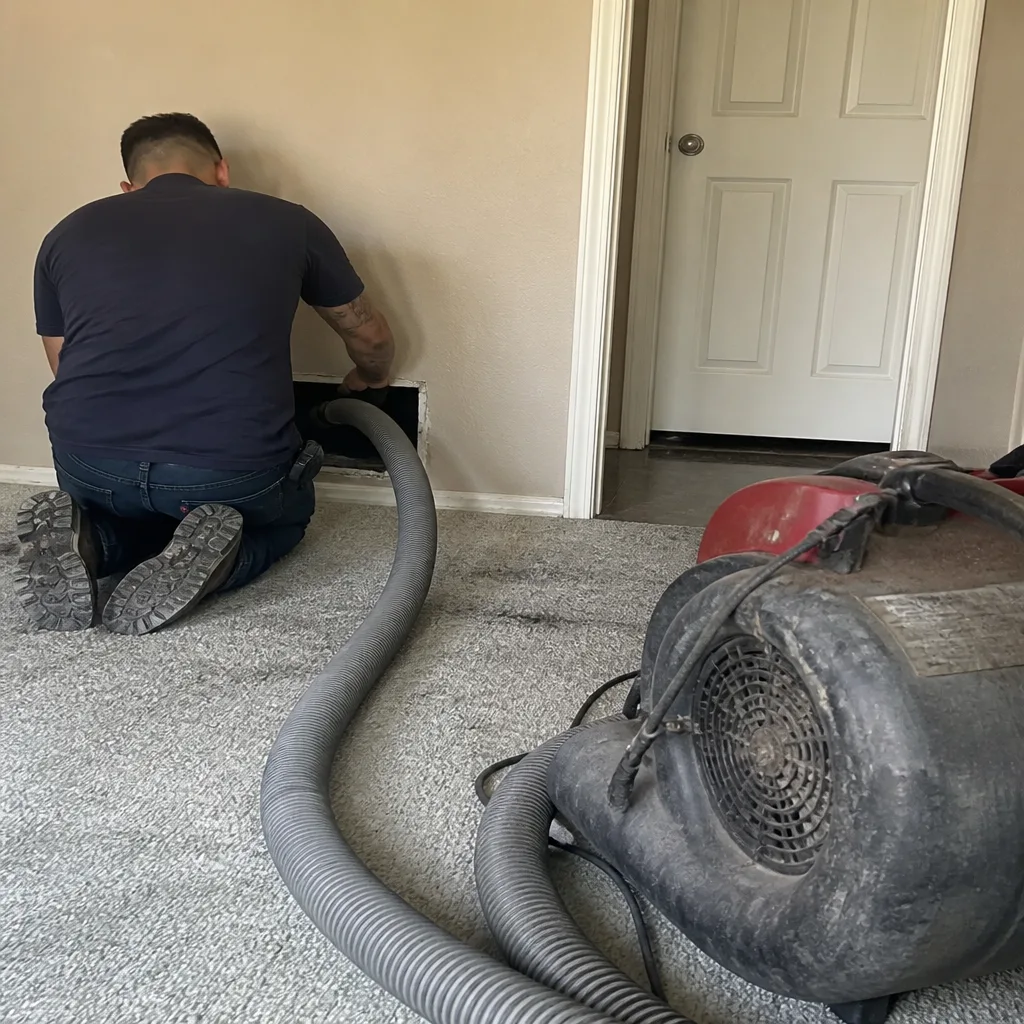 Before
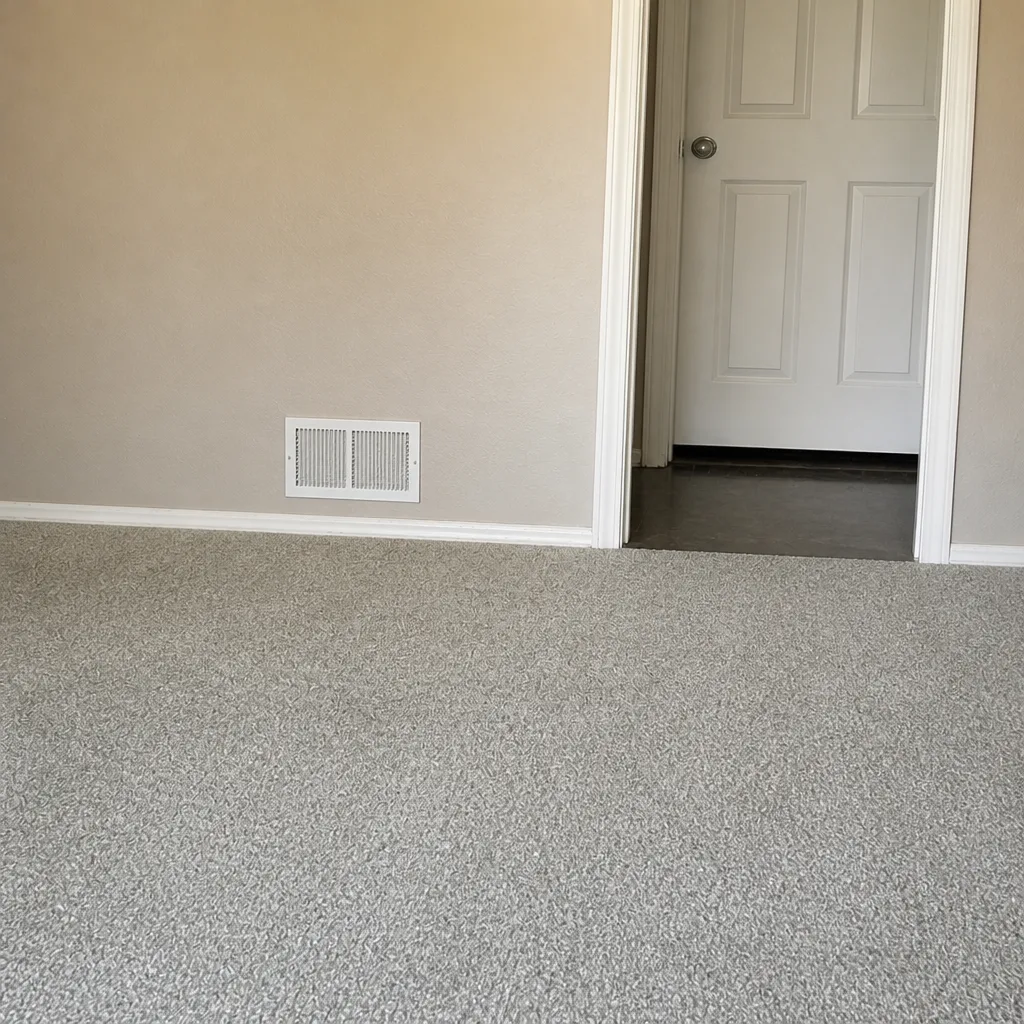 After
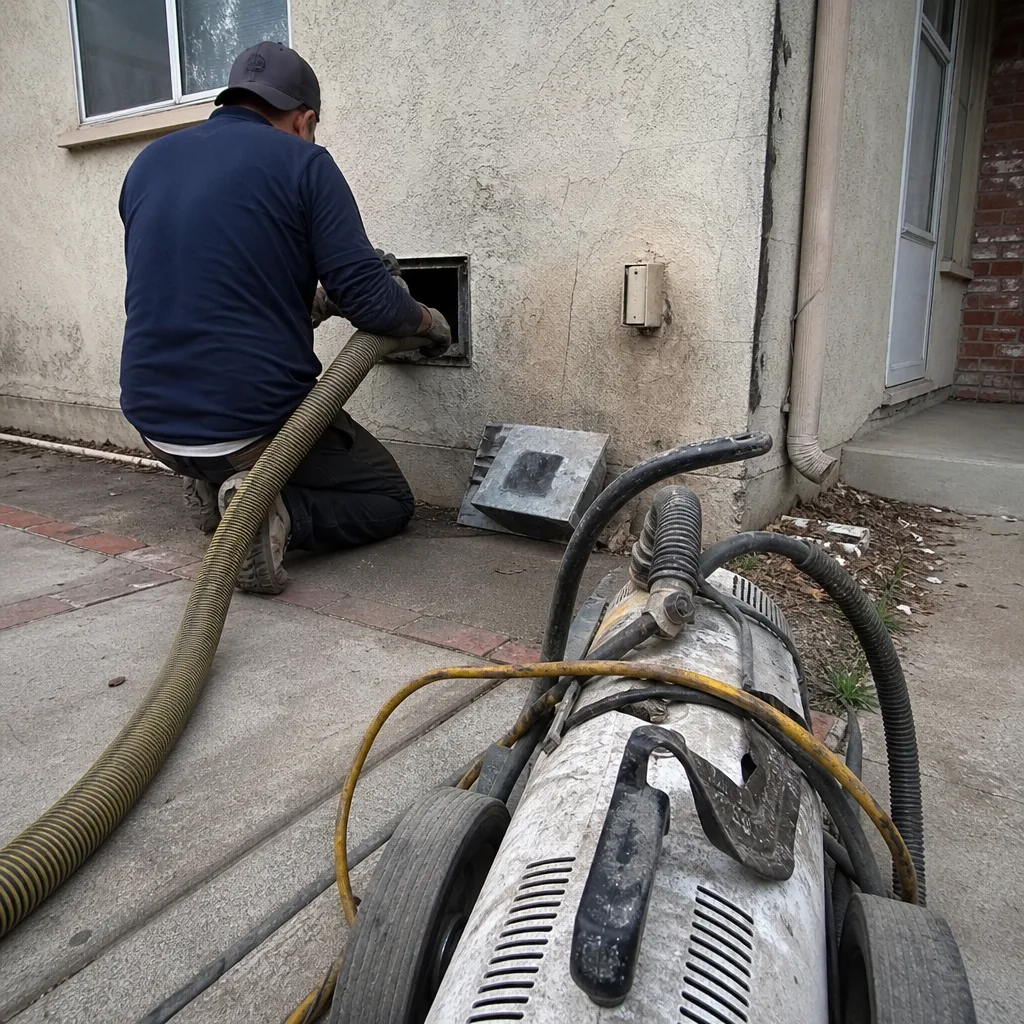 Before
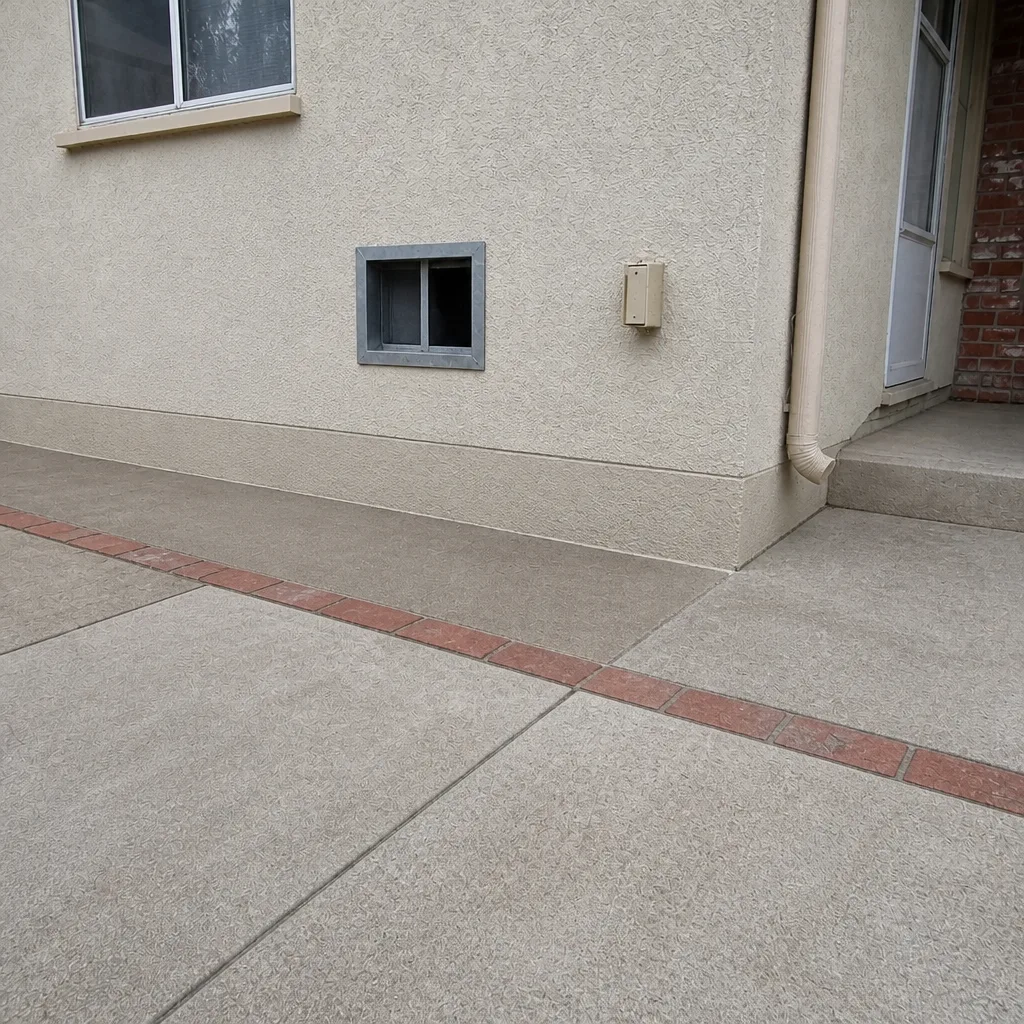 After
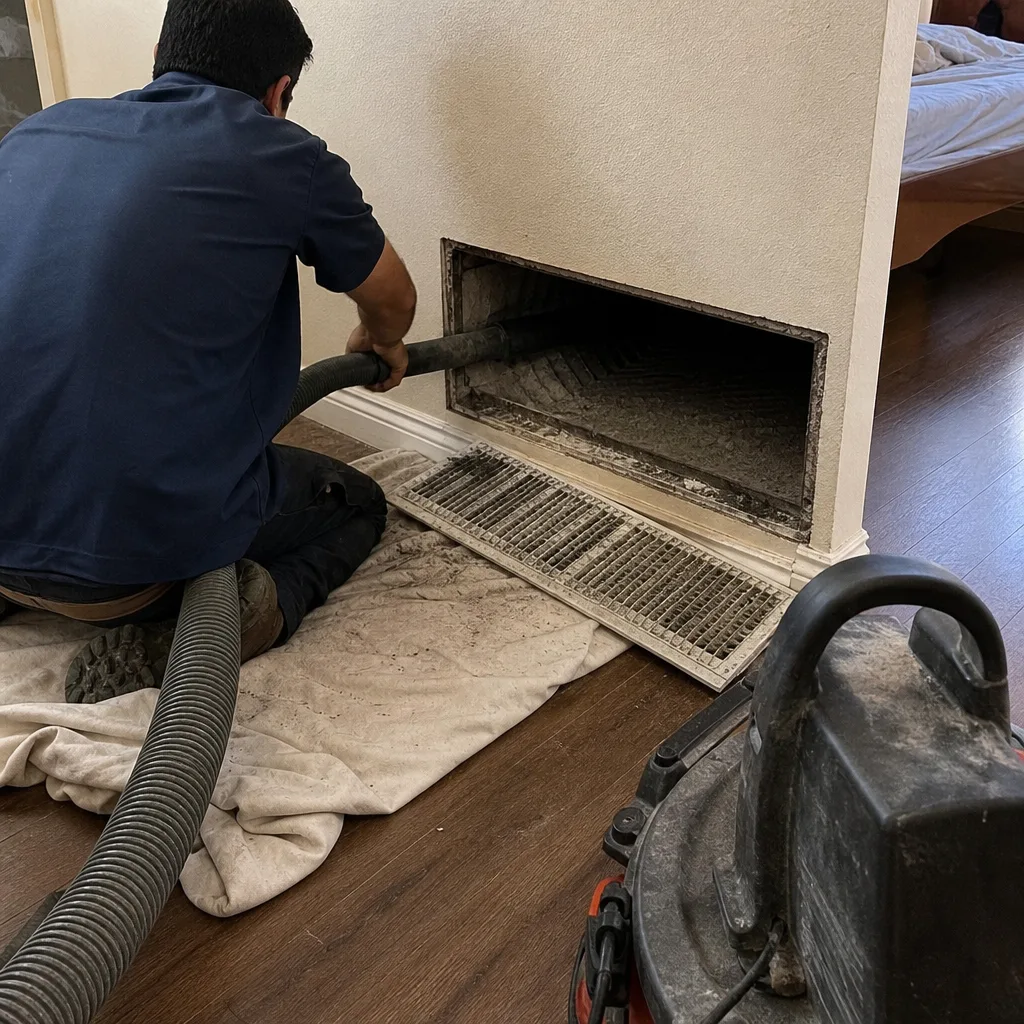 Before
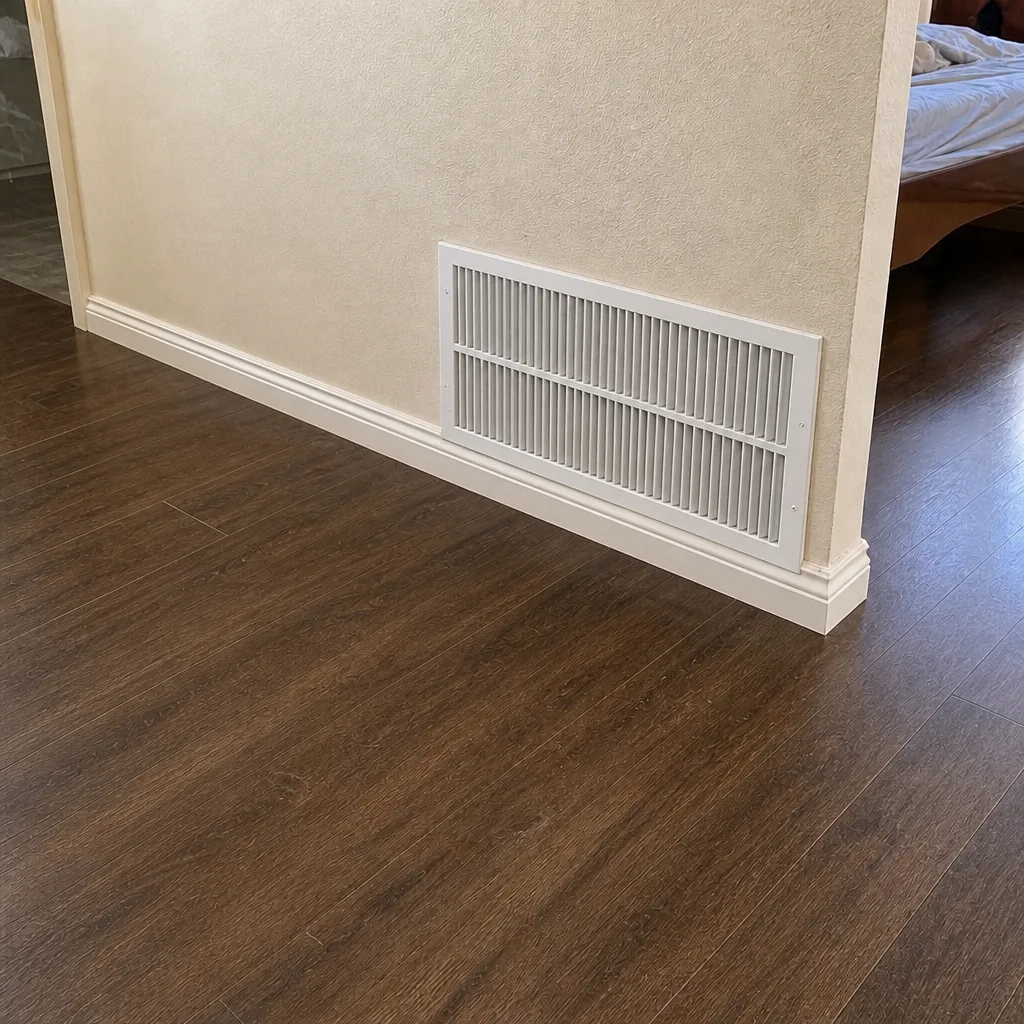 After
When to Call a Professional
Call a professional when the problem is in the duct runs, not at the registers. If the homeowner has cleaned the registers, replaced the filter, and cleared the dryer vent, and the air still smells musty or the registers are still blowing dust into the rooms, the contamination is in the duct walls. That requires negative-pressure equipment and trained technicians. If the home has not had the ducts cleaned in years, or if the duct work is old enough that liners may be degrading, the job needs a camera inspection before cleaning begins. If the homeowner can see dust on the register covers within weeks of cleaning them, the problem is upstream. Duct Cleaning Corona offers free estimates in Corona, and we can tell a homeowner in one visit whether their ducts actually need cleaning or whether a filter change will solve it. Call (855) 923-0983.
Frequently Asked Questions
DIY air duct cleaning is worth it for the first 18 inches of a register and for specific tasks like filter box inspection and short dryer vent runs, but it cannot clean the 10 to 40 feet of duct run where air quality contamination actually lives.
Negative pressure is the condition created when air is pulled out of a sealed duct system faster than it enters, which holds loose debris suspended in the air stream and prevents it from escaping through open registers. Professional equipment from Rotobrush and Nikro creates negative pressure continuously during agitation, while consumer vacuums create suction at one point without pressurizing the full run.
Yes, if the vent run is short, straight, and accessible from both ends, and the homeowner uses a proper brush kit with a cordless drill. If the vent exits through the roof or runs through an inaccessible wall cavity, the brush cannot reach the full length and the job needs professional equipment.
Ask what equipment they use, whether they use negative-pressure containment during the job, whether they camera-inspect the ducts, and whether they give a flat per-system price before work starts. Specific equipment names like Rotobrush, Nikro, or Abatement Technologies indicate real capability; vague answers indicate a brush-and-vacuum operation.
The cost of professional air duct cleaning in Corona varies by home size, duct system configuration, and the level of contamination present. The price is set per job by written estimate, not per vent. A per-vent quote is a pricing strategy, not a service description.
Duct cleaning frequency depends on the home, not the calendar. A Corona home with pets, a long cooling season, and Santa Ana wind events that bring desert dust into the system may need cleaning more often than a home in a milder climate with short duct runs. Inspection is how a homeowner determines whether cleaning is due; the answer is never a fixed number of years without looking at the ducts themselves.
The Bottom Line
The DIY-versus-professional question for air duct cleaning in Corona is not about effort and it is not really about cost. It is about whether the tool can do the job. A shop vac and a brush clean the opening. Negative-pressure equipment cleans the duct. For the homeowner willing to clean registers, inspect the filter box, and clear a short dryer vent run, DIY has a legitimate place and we will tell you exactly how to do it. For the duct runs themselves, which is where the air quality impact actually happens, the honest answer is that professional equipment is the only tool that reaches the problem. If you are not sure which situation you have, the estimate is free and the inspection tells you the answer without obligation. Call (855) 923-0983. We answer 24/7. Fast dispatch from 7am to 7pm, Sunday through Friday.
Written by the team at Duct Cleaning Corona, serving Corona since 2012.